
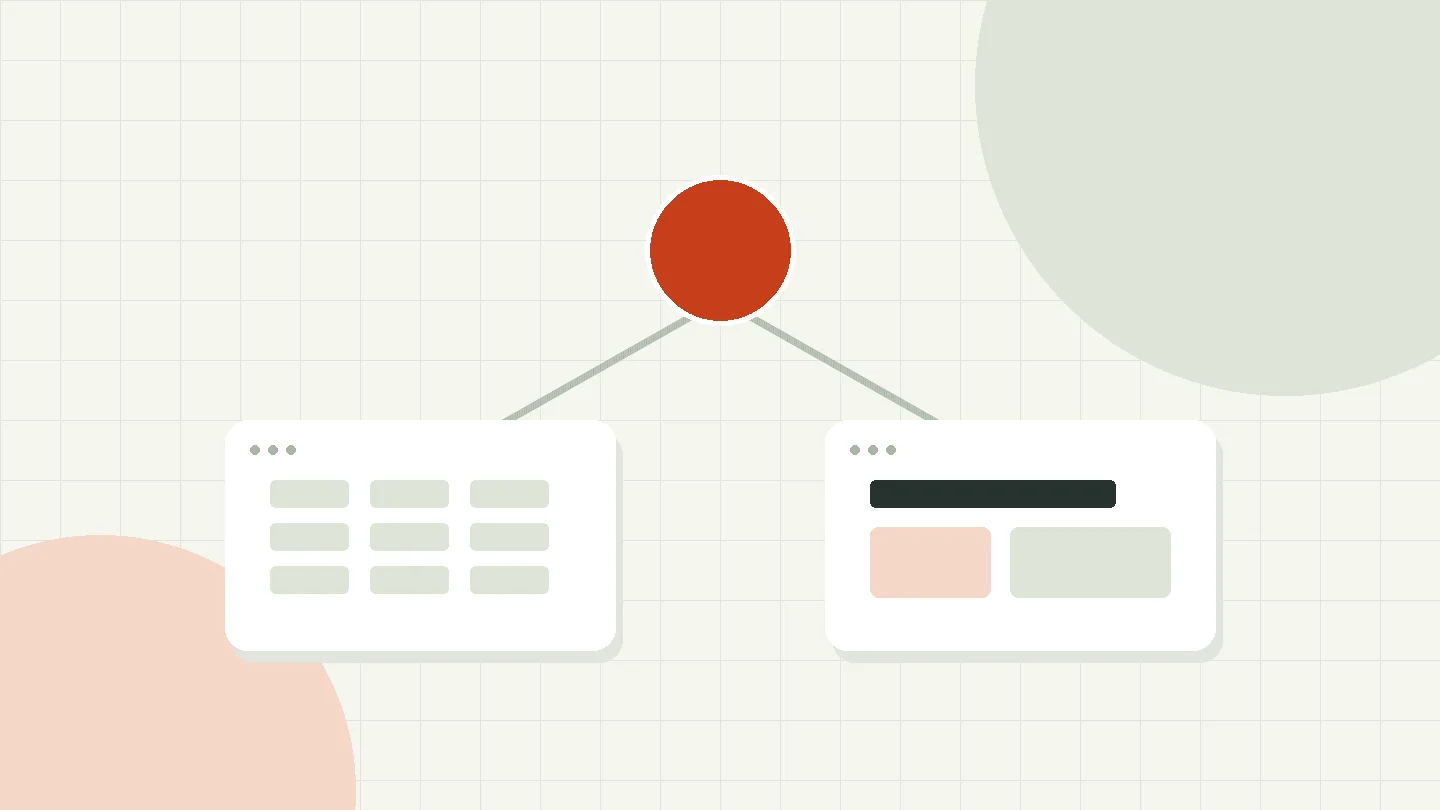
A company is looking for new software and initially finds two seemingly clear offers: an immediately available product with monthly licenses and an individually developed application. The price comparison is created quickly. However, the actual decision only begins where sales presentations end: with the daily processes, the existing data and the people who will work with the solution.
Off-the-shelf software can be an excellent choice. Likewise, a small individual application can have more impact than the introduction of a comprehensive suite. What is crucial is which requirements are actually indispensable and which habits can be meaningfully changed. This requires a comparison across the entire life cycle, including introduction, operation and later exit.
First understand the process
Before functions are collected, a specific process should be described: who starts it, what information is needed, what decisions are made and when is the result achieved? An example maintenance order could range from a customer call to deployment planning to feedback from the technician. Requirements arise at every transition, such as mobile recording, releases or handover to billing.
It is worth separating between legal or contractual requirements, economically important special features and historically developed preferences. A field may need to exist for verification reasons. The color of a specific table row, on the other hand, is rarely a good reason for individual development. Only this distinction makes offers comparable and prevents a new system from merely digitally replicating old detours.
What standard software can do well
Standard products bundle the requirements of many users. This is often advantageous for common tasks such as appointment management, general accounting or simple collaboration: basic functions are available, training material exists and the manufacturer continues to develop the product. A company can benefit from improvements without having to commission every change itself.
However, the benefit depends on the specific product and tariff. Role models, interfaces or data exports may only be available in higher packages. There is also the introduction effort and the maintenance of extensions. A license alone does not eliminate unclear processes. During the selection interview, typical processes should therefore be run through with your own, cleaned sample data, including an error or a subsequent correction.
Adaptability comes in different forms
Configuration, expansion and changes to the product core are economically different. A configurable release process is usually easier to update than a profound special development within a third-party system. Ask which adjustments need to be rechecked during updates and who is responsible for them. A seemingly inexpensive extension can represent a significant maintenance task in the long term.
When individual software makes sense
A tailor-made application is particularly suitable when an important process with available products can only be mapped across many media breaks. This applies, for example, to industry-specific calculations, unusual release chains or a close connection between existing specialist systems. Even a deliberately small user interface for a clearly defined process can justify a separate development approach.
The advantage lies in the freedom of design. The data model, user interface and integrations can be tailored to the actual tasks. The company takes on additional responsibility for this: requirements must be decided, changes must be prioritized and maintenance services must be permanently planned. Individual software does not automatically become simple, secure or independent through its source code. Comprehensible architecture, documentation and a realistic operational organization are crucial.
Total cost instead of starting price
A useful comparison includes at least introduction, data cleansing, migration, training, interfaces, hosting, support, updates and further development. Internal working time is also included. For standard software, user-dependent fees, additional modules and price changes may be relevant. Individual software incurs costs for specification, development, testing and technical maintenance. Different terms must be compared in the same observation period.
An example calculation should make assumptions visible. When employees enter data twice daily, time spent and error corrections can be observed over a limited period of time. This creates a comprehensible estimate, not a guarantee of success. It is also important to check whether the time saved can actually be used for other tasks. A theoretical minute per process is economically different than an activity that is completely eliminated.
Expect uncertainty
Instead of using a single, seemingly precise amount, three scenarios are helpful: low usage, expected usage, and significant growth. If the recommendation changes due to even small deviations, the decision needs more reliable data. This uncertainty can often be reduced more cheaply through a limited pilot operation than through additional rounds of presentations.
The mixed form is often overlooked
Many companies neither need a completely self-developed system landscape nor a single piece of software for all tasks. A standard product can form the stable foundation, while an individual web application complements a special process. The prerequisites are suitable interfaces, clear data responsibility and a clear separation of responsibilities.
A fictitious example: Commercial processing remains in an existing merchandise management system. A small portal accepts technical customer approvals and only sends back the approved status. This means that the special function remains manageable. At the same time, it must be regulated what happens if the interface is not accessible and which system contains the binding status in the event of a conflict.
Plan dependencies and exit
Both approaches can create bonds. A standard provider may determine export options and contract terms. Individual development can depend on individual people, insufficient documentation or operating environments that are difficult to transfer. The term independence should therefore be linked to verifiable conditions.
This includes readable data export, documented access and interfaces, regulated usage rights and a recovery procedure. Demonstrate a sample export and verify that relationships, attachments, and status information are included. For individual software, source code management, construction instructions, dependencies and handover documents should be agreed upon. A second team must be able to basically take over the operation without having to second guess the entire process.
A decision template that helps in everyday life
- Describe three to five typical processes and at least one exceptional case.
- Weight essential requirements and verifiable quality goals.
- Compare total costs using the same assumptions and time periods.
- Check data export, rights, interfaces and maintenance responsibility.
- Arrange a pilot with clear acceptance criteria.
The decision must also be supported organizationally. Whoever is responsible for purchasing does not automatically know the problems in the warehouse or service. Therefore, involve people who work with the data on a daily basis. A short test with realistic tasks often shows more than a long list of functions. Search paths, error messages and the comprehensibility of status changes should be monitored.
End the pilot with a clear acceptance
A pilot is only a decision-making aid if it is clear beforehand what is being checked. For the maintenance order described, this could be the complete recording, a representative handover and the traceable handover to billing. In addition, an intentionally incomplete process is carried out. What is monitored is whether the system clearly explains what is missing and who needs to act.
The participants should, if possible, complete their task without any ongoing explanation from the provider. Otherwise, the quality of a presentation will be assessed rather than the usability of the software. Feedback is ordered by severity: an unexplained authorization error has a different meaning than an inappropriate spacing between fields. Responsibility and re-examination are determined for each necessary correction.
Even a negative result can be useful. Perhaps a standard product will meet the essential requirements as soon as a previously unnecessary special route is no longer necessary. Perhaps, conversely, it turns out that a crucial process would only work with deep adjustments. In both cases the pilot reduced the uncertainty. The decision can then be justified based on observed processes, rather than based on the general impression of a feature list.
Before a long-term commitment is made, the results should be summarized in writing. This includes open risks, expected follow-up costs and the operating conditions. This makes it clear later under what assumptions the selection was made.
A fitting next step
Individual software is worthwhile if the benefits of targeted adaptation justify the development and operating costs. Standard software is suitable if it reliably covers the essential tasks and the remaining adjustments can be managed. A combined solution can combine both strengths. None of these variants replace clean data and clear responsibility.
GRITTMANN can support the technical inventory and the conception of a limited application. A sensible way to start is with a jointly described business process with understandable requirements before deciding on frameworks or screen masks. Ours are an illustrative starting point fictitious software application examples.
Sources and further documentation
Technical basics and additional information from the respective editors. Links last checked on 16.02.2026.
Stay in touch.